Packing Tips for Flats near Pinner Station (HA5)
If you are moving from a flat near Pinner Station, packing can feel oddly more complicated than the rest of the move. Tight hallways, shared entrances, parking restrictions, stairwells, lift bookings, and the usual last-minute "where did I put that charger?" chaos all stack up fast. That is exactly why good Packing Tips for Flats near Pinner Station (HA5) matter. A bit of planning here saves time, protects your belongings, and makes the actual moving day feel far less frantic.
This guide is written for real flat moves in and around HA5, where access can be a little awkward, storage space is usually at a premium, and you may not want boxes piled up for weeks. We will cover how flat packing works, what to prioritise, the mistakes people make, and how to build a simple packing plan that actually holds together when the kettle is already unplugged and the hallway is full of boxes.
One small truth from experience: the best packing jobs are rarely the prettiest. They are the ones that make unpacking easier, protect fragile items, and leave you able to find the essentials on the first night. Simple really. Not always easy, but simple.
Table of Contents
- Why Packing Tips for Flats near Pinner Station (HA5) Matters
- How Packing Tips for Flats near Pinner Station (HA5) Works
- Key Benefits and Practical Advantages
- Who This Is For and When It Makes Sense
- Step-by-Step Guidance
- Expert Tips for Better Results
- Common Mistakes to Avoid
- Tools, Resources and Recommendations
- Law, Compliance, Standards, or Best Practice
- Options, Methods, or Comparison Table
- Case Study or Real-World Example
- Practical Checklist
- Conclusion
- Frequently Asked Questions
Why Packing Tips for Flats near Pinner Station (HA5) Matters
Packing a flat is different from packing a house. That is the short version. In a flat, you usually have less space to spread out, fewer places to temporarily stack items, and more chances for a move to be affected by shared access. A corridor can become a bottleneck. A lift can take one box too many. A neighbour may need the hallway clear at the exact moment you have three suitcases, a lamp, and a laundry basket blocking the route.
Near Pinner Station, timing can matter too. Morning and evening movement around station roads, local foot traffic, parking limitations, and narrow access points can all make move day feel tighter than you expected. Packing well does not just protect your belongings; it helps you work with the building rather than against it.
There is also the stress factor. If the boxes are labelled badly or packed too heavily, you end up doing extra lifting, extra searching, and extra apologising to yourself later. Pack properly now and you will notice the difference the moment you open the new front door.
For many people, flat packing is also the first step in deciding whether to handle the move themselves or get help. If the move includes a lot of furniture, awkward items, or a rush deadline, it may be worth looking at a wider removal services option or a more targeted packing and unpacking service so you are not trying to do everything at once.
How Packing Tips for Flats near Pinner Station (HA5) Works
The packing process works best when you treat the flat like a small project with stages rather than a big weekend panic. Start with sorting, move into decluttering, then pack room by room, and finish with an essentials plan. The trick is to make each stage easier than the one before it. Not harder. You do not want to create a mountain of half-packed chaos and call it progress.
For flats near Pinner Station, the practical side of packing often includes a few local realities:
- limited on-street parking for a van
- shared stairs or lift access
- busy communal hallways
- smaller storage areas such as cupboards, airing cabinets, or boxed-in corners
- an increased need to carry items out in manageable loads
That means your packing method should focus on accessibility, weight control, and clear labelling. A box packed with books and kitchenware may sound efficient, but it becomes a regret the second you carry it down two flights of stairs. We have all seen that box. It is the box everyone complains about later.
In practical terms, the method is simple:
- Sort items into keep, donate, recycle, and pack.
- Gather supplies before you start boxing anything.
- Pack by room and category, not by mood.
- Label each box clearly on at least two sides.
- Create one essentials box or overnight bag.
- Leave a clear access path for moving day.
That last point is surprisingly important in flats. If your front door opens into a narrow entrance hall, you need a tidy route to the exit or the whole move slows down. A smooth move is often just a series of small decisions made early.
Key Benefits and Practical Advantages
Good packing does more than keep things neat. It reduces risk, saves time, and makes unpacking feel less like punishment. There is a reason experienced movers spend so much energy on boxing, wrapping, and labelling before the van is even loaded.
- Less damage: Proper padding and smart box loading reduce breakages, dents, and scratches.
- Faster loading and unloading: Clearly labelled boxes help movers place items in the right rooms first time.
- Less lifting strain: Smaller, balanced boxes are easier to carry through stairwells and tight corners.
- Better organisation: You unpack faster when similar items are grouped together.
- Lower stress: Knowing where essentials are gives you breathing space on day one.
For a flat move, the real advantage is momentum. Once you have a clean packing system going, the whole process feels more manageable. You stop "sort of packing" and start actually moving. That shift matters.
Expert summary: For flats near Pinner Station, the smartest packing approach is not about using the most boxes. It is about using the right boxes, keeping them light enough to carry safely, and making sure the route out of the property stays clear.
There is also a financial angle, even if nobody loves talking about it. Less damage usually means fewer replacements. Better organisation may save time on the moving day itself. And if you are paying for a moving team, efficient packing can help the job run more smoothly from start to finish.
Who This Is For and When It Makes Sense
This advice is useful if you are:
- moving from a studio, one-bed, or two-bed flat
- living in a block with stairs, a lift, or a tight communal entrance
- moving with limited parking outside
- trying to move after work or over a weekend
- downsizing and needing to reduce clutter as you pack
- sharing a flat and need to split belongings cleanly
- moving with fragile items, valuables, or awkward furniture
It is especially relevant if you are short on time. Truth be told, many flat moves start with good intentions and end with a pile of mixed boxes labelled "misc." That label is a classic. It never helps, despite the optimism.
This also makes sense if you are deciding whether to do the packing yourself or get professional help. If you only have a few rooms and a couple of days, you may manage perfectly well on your own. If you are juggling work, children, or a tight move-out deadline, support from a man and van or a more complete home moves service can take a lot of pressure off.
Step-by-Step Guidance
1. Start with a realistic packing timeline
Work backwards from moving day. Small flats can still take longer than expected because day-to-day life gets in the way. A simple timeline might be: non-essential items first, then decor and spare linens, then books and kitchen extras, and finally daily-use items. Leaving everything to the last 48 hours is how people end up packing toothpaste at 11:30 p.m. in a mild state of disbelief.
2. Declutter before you box
If you do not want it, use it, or need it, do not pack it. This is the best time to let go of duplicate mugs, old cables, worn towels, and kitchen gadgets you have not touched in years. Less stuff means fewer boxes, which means less hauling. Very hard to argue with that.
3. Choose the right packing materials
Use sturdy boxes in a few sizes rather than only one giant size. Small boxes are ideal for books, tins, and heavy items. Medium boxes suit kitchen goods and household items. Large boxes should be reserved for light, bulky things like bedding and cushions. Add tape, paper, wrapping material, labels, marker pens, and a couple of reusable bags for essentials.
4. Pack room by room
This is the cleanest way to stay in control. Kitchen items in one area, bathroom items in another, bedroom items together, and so on. It sounds obvious, but once you start mixing rooms, unpacking becomes messy. A flat move already involves enough decision-making without turning every box into a mystery.
5. Protect fragile items properly
Wrap glasses, plates, mirrors, and ornaments individually. Fill gaps inside boxes so items do not rattle around. Heavier items should sit at the bottom, lighter ones on top. You want a snug box, not a box that sounds like it contains a bag of cutlery and a spare saucepan.
6. Label with useful detail
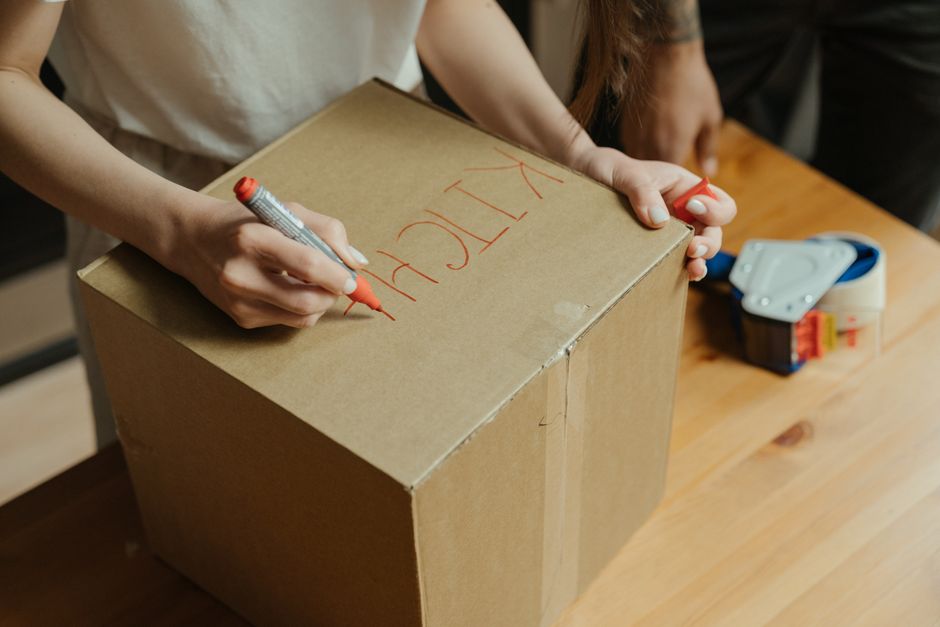
Write the room name, a short contents note, and whether the box is fragile. For example: "Kitchen - mugs, plates, tea towels - fragile." That kind of label saves time later and helps anyone assisting with unloading. A quick number system can help too, especially if you want to track which boxes are priority unpacking items.
7. Create a first-night box
Keep the essentials separate: kettle, tea or coffee, phone charger, toiletries, medication, a change of clothes, toilet paper, snacks, and basic cleaning items. If you arrive tired, this one box can feel like a miracle. A small one, but still.
8. Keep walkways and exit routes clear
In a flat, where the move-out path may be short but narrow, avoid stacking boxes in doorways or blocking the hallway. Safety matters here. It also keeps everyone calmer, which is no small thing when the van is waiting outside and someone is trying to find the lease paperwork.
Expert Tips for Better Results
Here is where small improvements make a big difference.
- Use fewer but better boxes: Cheap, soft boxes often collapse when stacked. That becomes annoying very quickly.
- Balance every box: Mix weight sensibly. A box should be liftable without wobbling like a shopping bag in the wind.
- Pack the kitchen early: Kitchens take longer than people expect because of fragile pieces and odd-shaped items.
- Keep documents with you: Passports, tenancy papers, and move-related paperwork should not disappear into a random box.
- Take photos of cable setups: Especially for TVs, routers, monitors, and home office desks. Saves time later.
- Use linens as padding: Towels and bedding can protect softer items and reduce waste.
- Seal liquids carefully: Tape lids if needed and place them in separate bags. One leaky bottle can ruin a good box. Ask anyone who has unpacked cleaning products from a soggy carton.
A useful local-minded tip: if your building has limited lift access or specific booking windows, pack the most urgently needed items last so they are easiest to reach. You do not want your toothbrush buried beneath winter coats and a bread maker you forgot you owned.
Another good habit is to pack an "open first" box with the items you will want as soon as you arrive: scissors, bin bags, light bulbs, a mug, snacks, and a phone charger. Small things. Big relief.
Common Mistakes to Avoid
Some packing errors are so common they almost feel traditional. Best avoided, though.
- Overfilling boxes: If you cannot lift it safely, it is packed badly.
- Packing too late: Rushing creates breakages, bad labels, and forgotten essentials.
- Using too many loose bags: Bags are fine for soft items, but they do not stack well and they hide things.
- Leaving fragile items unmarked: No one enjoys discovering a broken glass because it looked like a box of towels.
- Mixing all rooms together: This makes unpacking much slower.
- Forgetting access constraints: In flats, the route out matters just as much as the packing itself.
- Not checking furniture fit: Large wardrobes, sofas, or beds may need dismantling before moving day.
One easy-to-miss issue is forgetting where you put the screws, shelf pegs, or assembly instructions. Pop them in a labelled bag and tape it to the furniture piece or keep it with the same-room box. If you have ever reassembled a bed at midnight without the right screws, you know why this matters. A bit too well, probably.
Tools, Resources and Recommendations
You do not need a huge toolkit, but a few things make packing much smoother.
| Item | Why it helps | Best use |
|---|---|---|
| Small and medium boxes | Safer to lift and easier to stack | Books, kitchen items, mixed household goods |
| Packing paper or wrapping | Protects fragile surfaces | Glasses, plates, ornaments |
| Strong tape | Keeps boxes sealed during transit | All packed boxes |
| Permanent marker | Makes labels visible at a glance | Room labels, contents, fragile notes |
| Bubble wrap or soft padding | Reduces breakage risk | Very fragile or valuable items |
| Zip bags | Great for screws and small parts | Furniture fixings, chargers, cables |
| Reusable bags | Handy for soft items and first-night essentials | Linens, toiletries, snacks |
If you would rather not source all the materials yourself, some moving providers offer boxing help as part of a broader package. In those cases, it can be worth comparing the scope of support against what you need. For example, a basic man with van arrangement may suit smaller flat moves, while a fuller man with a van option can be useful when you need flexibility without overcomplicating things.
It may also help to think about sustainability. Reusing boxes where safe, reducing unnecessary packing material, and recycling after the move can keep waste lower. If that matters to you, a page like recycling and sustainability may be a useful next read.
Law, Compliance, Standards, or Best Practice
For a typical flat move, packing itself is not usually about complex legal rules. Still, there are some sensible standards and best practices worth following, especially in shared residential buildings. Keep communal areas clear, avoid blocking exits, and follow any building rules about lift bookings, loading access, or moving hours. Those are practical expectations more than fancy paperwork, but they matter.
If you are moving from rented accommodation, check your tenancy agreement for any move-out conditions, such as returning keys in a certain way, leaving the property clean, or removing all belongings. Packing well supports those obligations because it reduces the chance of leaving items behind.
Health and safety also matters in a modest, everyday way. Heavy boxes should be lifted with care, not heroics. If something feels too awkward to carry safely through a narrow stairwell, split it into smaller loads or ask for help. A broken vase is frustrating; a strained back is worse.
Where a moving company is involved, it is sensible to ask about insurance cover, handling practices, and how fragile items are managed. You do not need to turn it into a legal seminar. Just be clear on what is protected and what you should pack yourself. If you want to understand that side better, the pages on insurance and safety and health and safety policy are useful starting points.
Options, Methods, or Comparison Table
There is more than one way to pack a flat properly. The right method depends on how much time you have, how much stuff you own, and how much help you can realistically get.
| Method | Best for | Pros | Trade-offs |
|---|---|---|---|
| DIY room-by-room packing | Small flats with time to prepare | Lowest cost, full control | Takes longer, easy to procrastinate |
| Hybrid packing with some professional help | Busy households or fragile-heavy moves | Less stress, better efficiency | Costs more than DIY |
| Full packing service | Tight deadlines or larger flat contents | Fast, organised, less lifting | Higher cost, less hands-on control |
To be fair, many flat movers end up choosing a hybrid approach without naming it that. They pack clothes and books themselves, then get help with furniture, awkward items, or the final van load. There is nothing wrong with that. It is often the most sensible choice.
If you are comparing move support more broadly, browsing movers, removal company, and removals near me style services can help you decide how much assistance you actually need rather than what sounds impressive on paper.
Case Study or Real-World Example
Imagine a one-bedroom flat near Pinner Station with a narrow hallway, a small kitchen, and a couple of bulky items: a bed frame, a chest of drawers, a bookshelf, and the usual box of books that somehow weighs twice what it should. The move is set for a Saturday morning, and access to the building is okay, but not generous.
The best packing approach would probably look like this:
- three days before: start with non-essentials, books, decor, and spare linens
- two days before: pack kitchen extras, bathroom spares, and wardrobe overflow
- the day before: finish daily items, dismantle furniture where needed, and create the essentials box
- moving morning: clear the corridor, keep keys and paperwork handy, and do a final walk-through
In this kind of move, the difference between stress and calm is usually not the van. It is the packing. If the boxes are properly labelled and not too heavy, the loading goes quickly. If they are mixed, overpacked, and missing labels, the whole thing slows down and everyone starts making guesses. Nobody enjoys guesswork at 8:15 a.m.
A realistic outcome here is not perfection. It is a move where your kettle, chargers, toiletries, and a clean set of bedding are easy to find when you arrive. That alone can make the first evening feel almost normal. Almost.
Practical Checklist
Use this before moving day so nothing important gets left behind.
- Decluttered items I no longer need
- Enough small and medium boxes ready
- Tape, marker pens, and packing material available
- Fragile items wrapped properly
- Boxes labelled by room and contents
- Essentials box packed for the first night
- Furniture fixings and cables bagged and labelled
- Hallway and exit route kept clear
- Lift booking or access arrangements confirmed, if needed
- Keys, documents, and chargers kept separate from general boxes
- Final bin emptied and recycling sorted where appropriate
- Property checked room by room before leaving
If you can tick most of those off, you are in good shape. Not flawless. Just properly ready, which is what counts.
Get a free quote today and see how much you can save.
Conclusion
Packing for a flat near Pinner Station does not need to be dramatic. It just needs a bit of structure, sensible box choices, and a clear plan for access, timing, and essentials. When you pack in a way that suits flat living, the move becomes easier to carry, easier to load, and far easier to unpack.
The best outcome is simple: fewer surprises, fewer broken items, and a first night that feels organised instead of chaotic. Whether you are moving a studio or a multi-room flat, a careful packing method pays off in very real ways. And once the boxes are labelled, the route is clear, and the kettle is ready for the other side, you will feel the difference straight away.
Take it one room at a time, keep the heavy stuff manageable, and give yourself a little grace. Moves are never completely effortless, but they do not have to be overwhelming either.
Frequently Asked Questions
What are the best packing tips for flats near Pinner Station (HA5)?
Start early, declutter first, use small and medium boxes, label everything clearly, and keep your essentials separate. In flats, access and lift space matter too, so pack with the route out in mind.
How far in advance should I start packing a flat?
For a small flat, a couple of weeks is comfortable if you work steadily. If you are short on time, begin with non-essential items and build from there. Leaving everything until the last day is never a fun plan, honestly.
What should go in a first-night box?
Pack toiletries, a change of clothes, chargers, toilet paper, snacks, medication, basic cleaning supplies, and something for tea or coffee. Anything you would want within the first few hours should stay easy to reach.
Should I use large boxes for everything?
No. Large boxes are best for light, bulky items like bedding or cushions. Heavy items such as books or tins should go in smaller boxes to keep them safe and manageable.
How do I protect fragile items when packing a flat?
Wrap each item individually, pad gaps inside the box, and avoid overloading the container. Mark fragile boxes clearly so they can be handled carefully during loading and unloading.
Is it worth hiring help for a flat move?
If you have limited time, heavy furniture, awkward access, or a lot of fragile items, yes, it can be worth it. A bit of help often reduces stress and makes the move more efficient.
What is the biggest packing mistake people make?
Overpacking boxes is probably the most common one. A box that is too heavy is harder to carry, more likely to split, and more likely to cause injury or breakage.
How do I make unpacking easier later?
Pack room by room, label boxes with contents, and keep related items together. If you can unpack essentials first and living-room clutter later, you will settle in much faster.
Do I need to dismantle furniture before moving from a flat?
Often, yes, especially for larger beds, wardrobes, and shelving. Measure doorways and stair access in advance if possible. A piece that seems fine in the room can become a nuisance in the hallway.
What if my flat has no lift?
Use lighter boxes, pack in smaller loads, and plan for extra carrying time. If you are on an upper floor, try to keep the pathway clear and consider getting help for the heavier items.
Can I pack everything myself, or should I get a packing service?
You can absolutely pack yourself if the move is straightforward and you have time. A packing service makes more sense when time is tight, the contents are fragile, or you simply want less on your plate.
How should I handle cables, screws, and small parts?
Use labelled zip bags and keep them with the item they belong to. Tape the bag to the furniture piece or place it in a clearly marked room box so nothing disappears into the moving abyss.
What should I do on the morning of the move?
Do a final check of cupboards, sockets, and storage areas, keep keys and documents handy, and make sure the exit route is clear. Once that is done, you can move with a lot more confidence.
If you are planning a move near Pinner Station and want a calmer, better-organised day, thoughtful packing is one of the smartest places to start. Small decisions now save a lot of trouble later, and that is about as practical as moving advice gets.